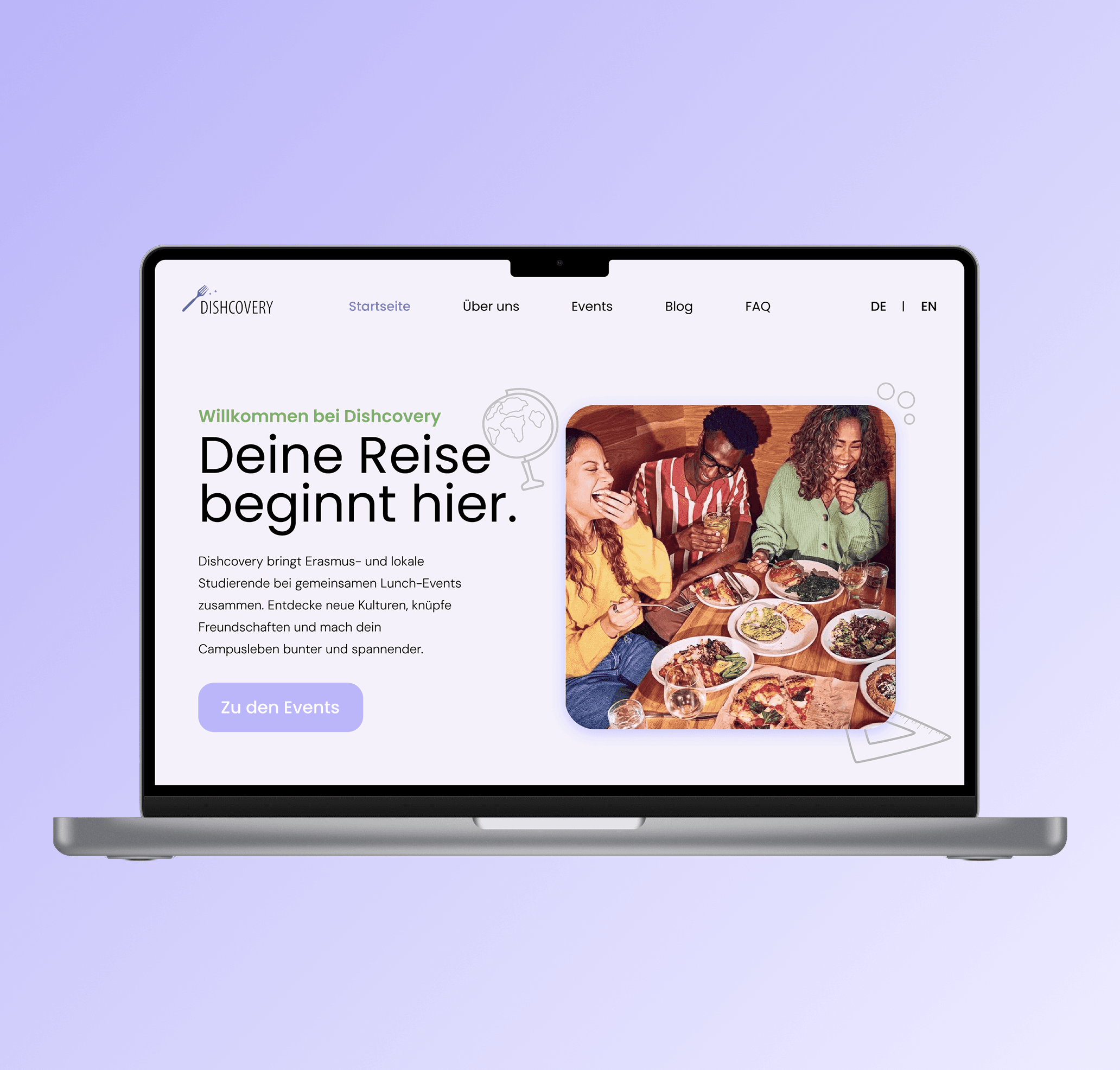
Dishcovery - University Semester Project
RESEARCH
UX DESIGN
1. Context
Dishcovery is a university service concept designed to connect local and Erasmus students through themed lunch experiences on campus.
Instead of positioning social integration as a formal program or event series, I explored food as a low-barrier excuse for interaction. Shared meals already happen informally on campus, but often within existing social circles. Dishcovery structures these moments into intentional, recurring experiences that make meeting new people feel natural rather than forced.
The digital platform supports discovery, coordination, and continuity, but the core experience happens offline, around a shared table.
2. My Role & Team
This project was developed in a small team of two as part of a university service design course.
I led the concept framing, service logic, experience design, and digital platform exploration, working hands-on across research synthesis, user flows, and system thinking. Collaboration focused on sparring, feedback, and refinement rather than role separation.
3. The Challenge
Many Erasmus students struggle to meaningfully connect with local students, while local students often stay within familiar peer groups. Existing campus initiatives tend to feel either overly institutional or socially demanding, which creates friction for participation.
The challenge was to design a service that:
Encourages spontaneous, inclusive interaction
Feels casual rather than programmatic
Works across cultures and language levels
Requires minimal commitment to join
Most importantly, the experience had to be accessible even for students who do not actively seek social events.
4. Process at a Glance
I approached Dishcovery as a service system, not as a feature-led app.
Observed informal campus eating behaviors
Identified food as a recurring social anchor
Framed lunch as a repeatable, low-pressure interaction ritual
Designed a service flow around themed tables (DoLu concept)
Defined the platform’s role as facilitator, not destination
The process stayed intentionally lean, focusing on interaction logic and experience coherence rather than visual polish too early.
5. Key Design Decisions & Insights
Food as a Social Equalizer
Eating together removes many of the social pressures associated with networking or “meeting new people.” It gives participants a shared activity, a reason to stay, and natural conversation starters.
Themes Create Soft Structure
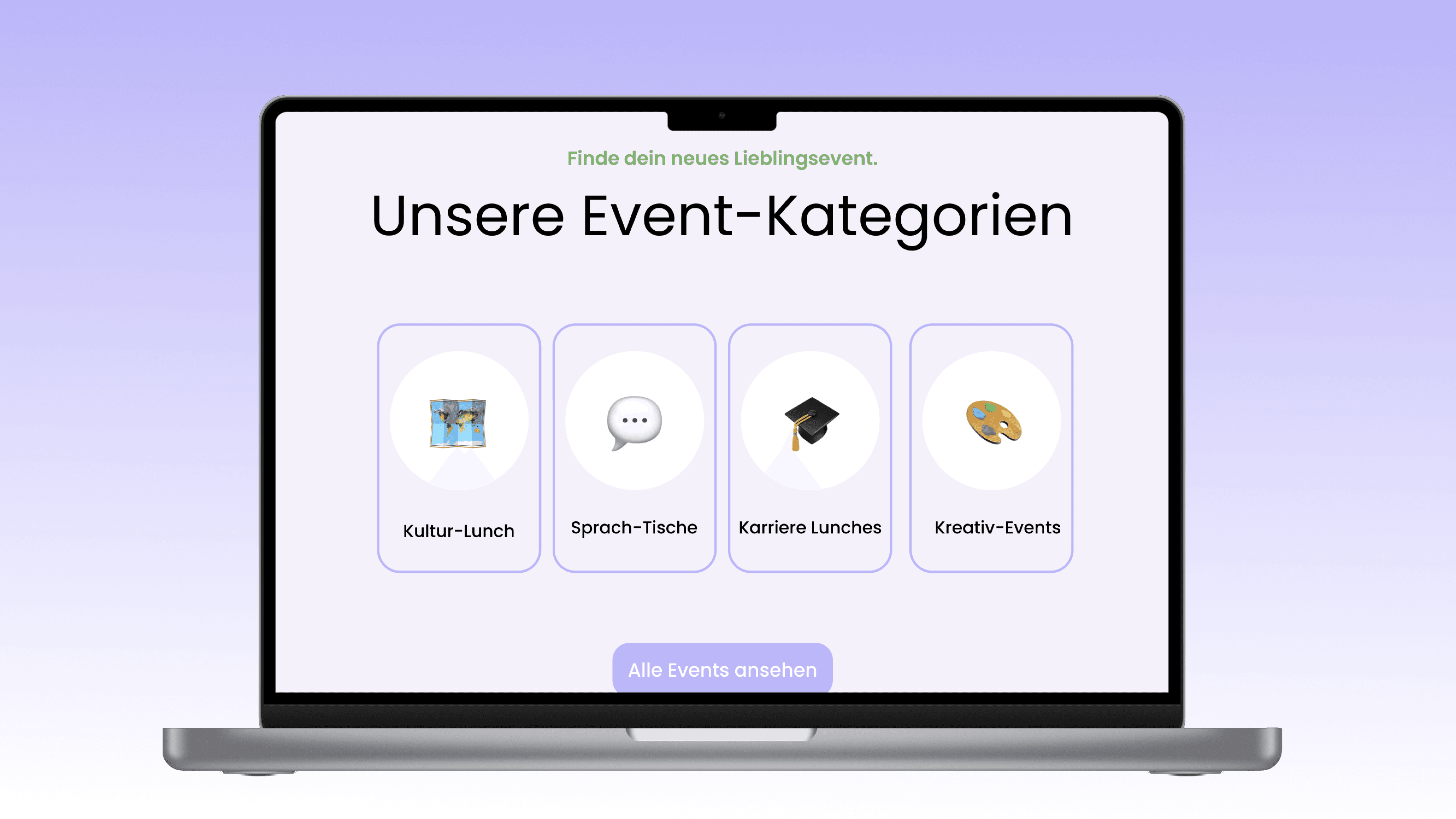
Each lunch table follows a light theme (culture, language, interests), providing guidance without strict agendas. This helps participants self-select while keeping the atmosphere informal.
Offline First, Digital Second
The platform does not try to replace the experience. It supports:
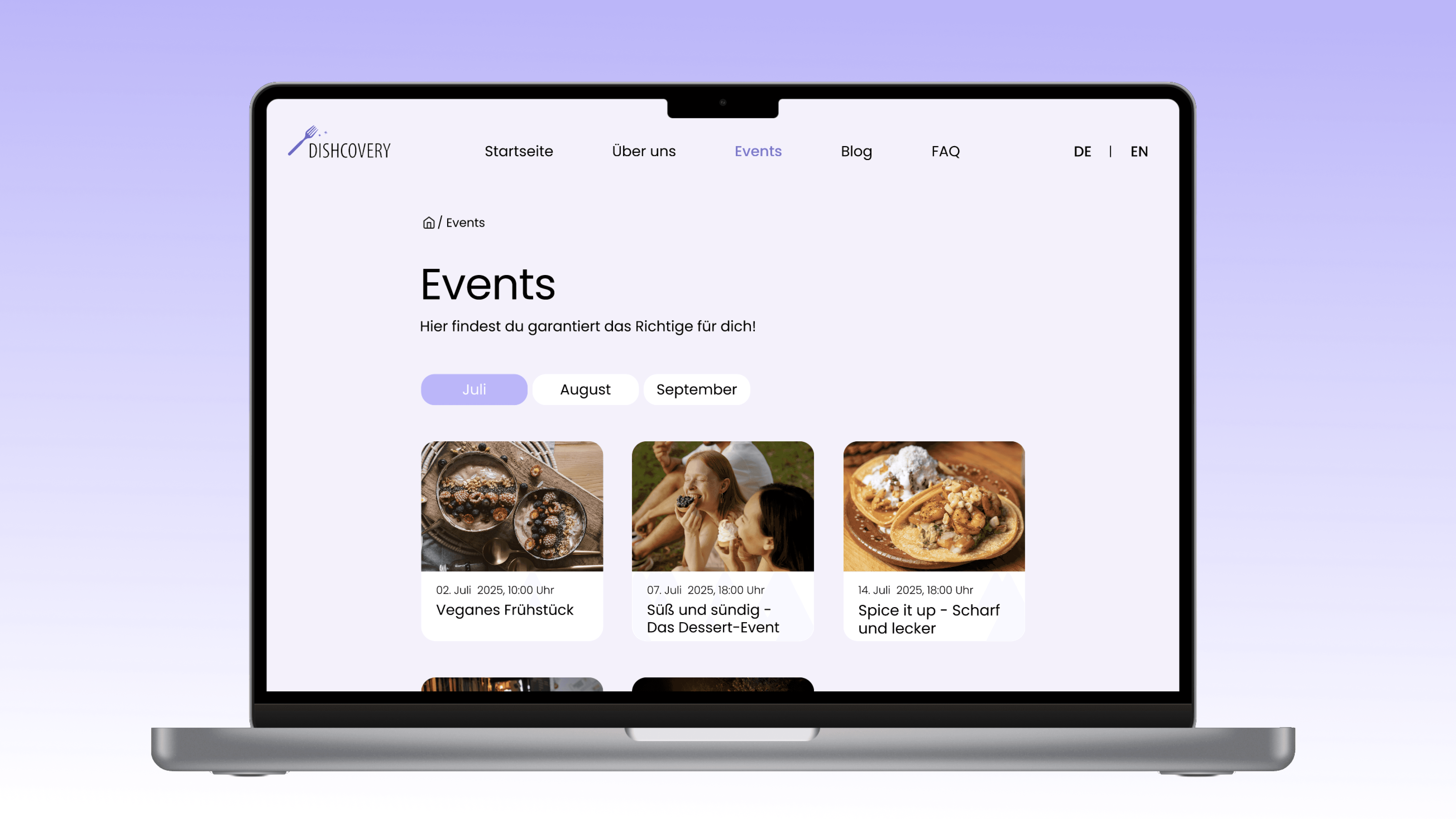
Discovering upcoming lunches
Understanding the theme and vibe
Lowering uncertainty before joining
Encouraging repeat participation
This decision prevented overengineering the digital layer and kept the service grounded in real behavior.
Inclusivity Through Simplicity
No profiles, no matching algorithms, no social performance. The service is designed to feel welcoming even for introverted or newly arrived students.
6. Outcome & Learnings
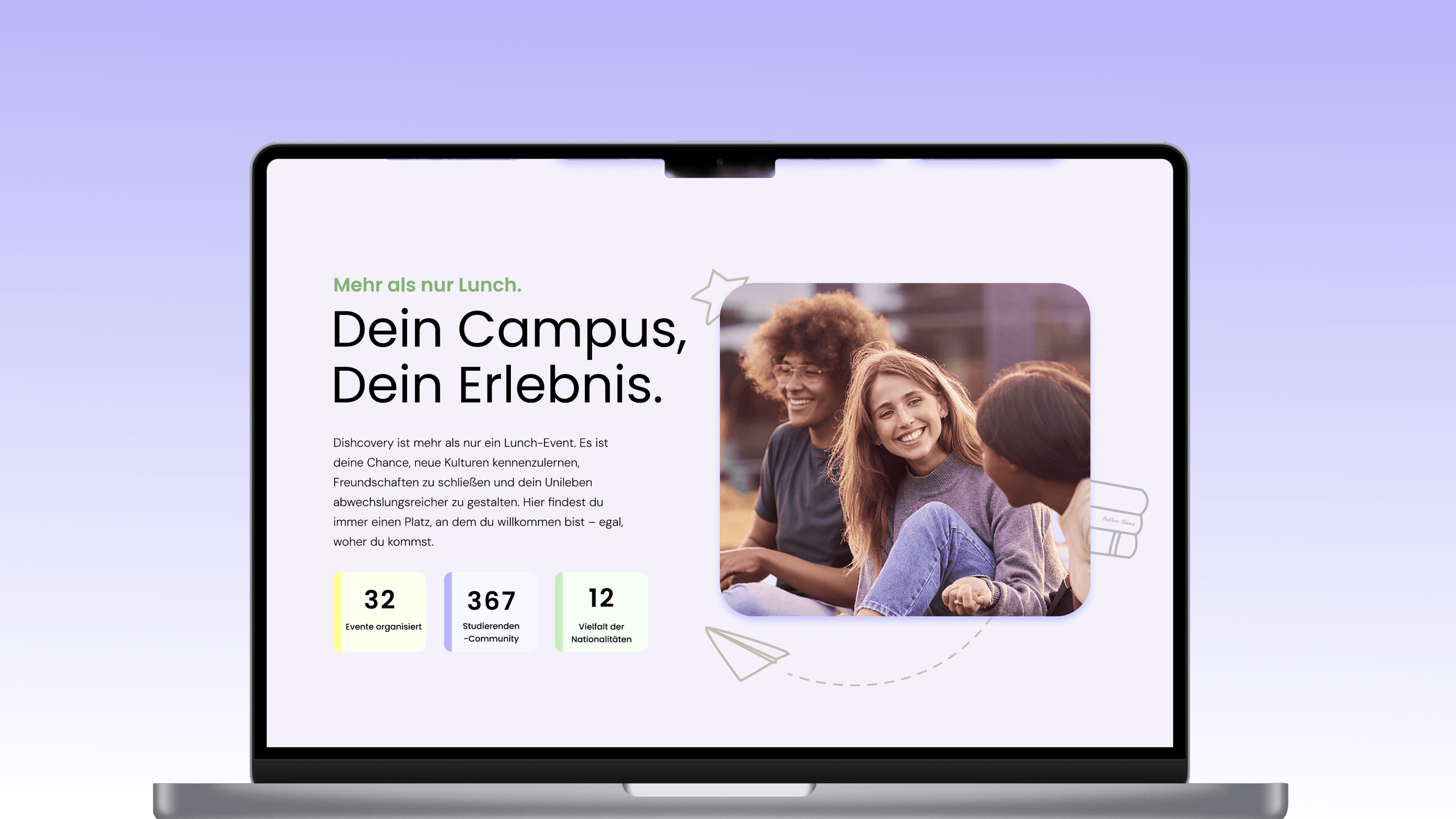
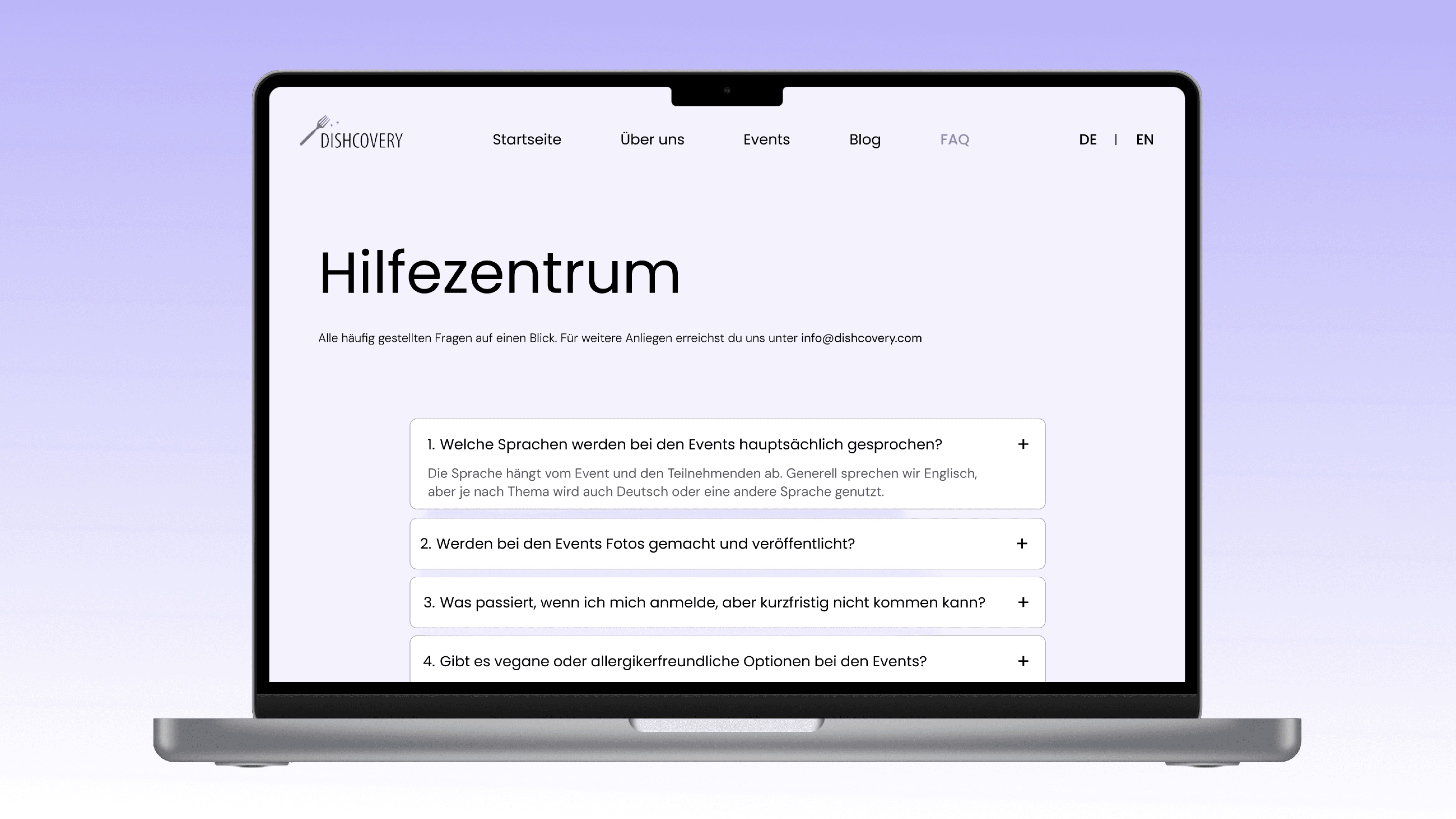
Dishcovery resulted in a coherent service concept supported by a digital platform prototype and clear experience logic.
Key learnings:
Strong services often emerge from everyday behaviors
Reducing friction matters more than adding features
Not every social problem needs a “smart” solution
Designing restraint can be as important as designing functionality
The project strengthened my ability to think in systems, design for human comfort, and clearly separate experience value from digital tooling.
⭐️ View interactive Figma Prototype → Link
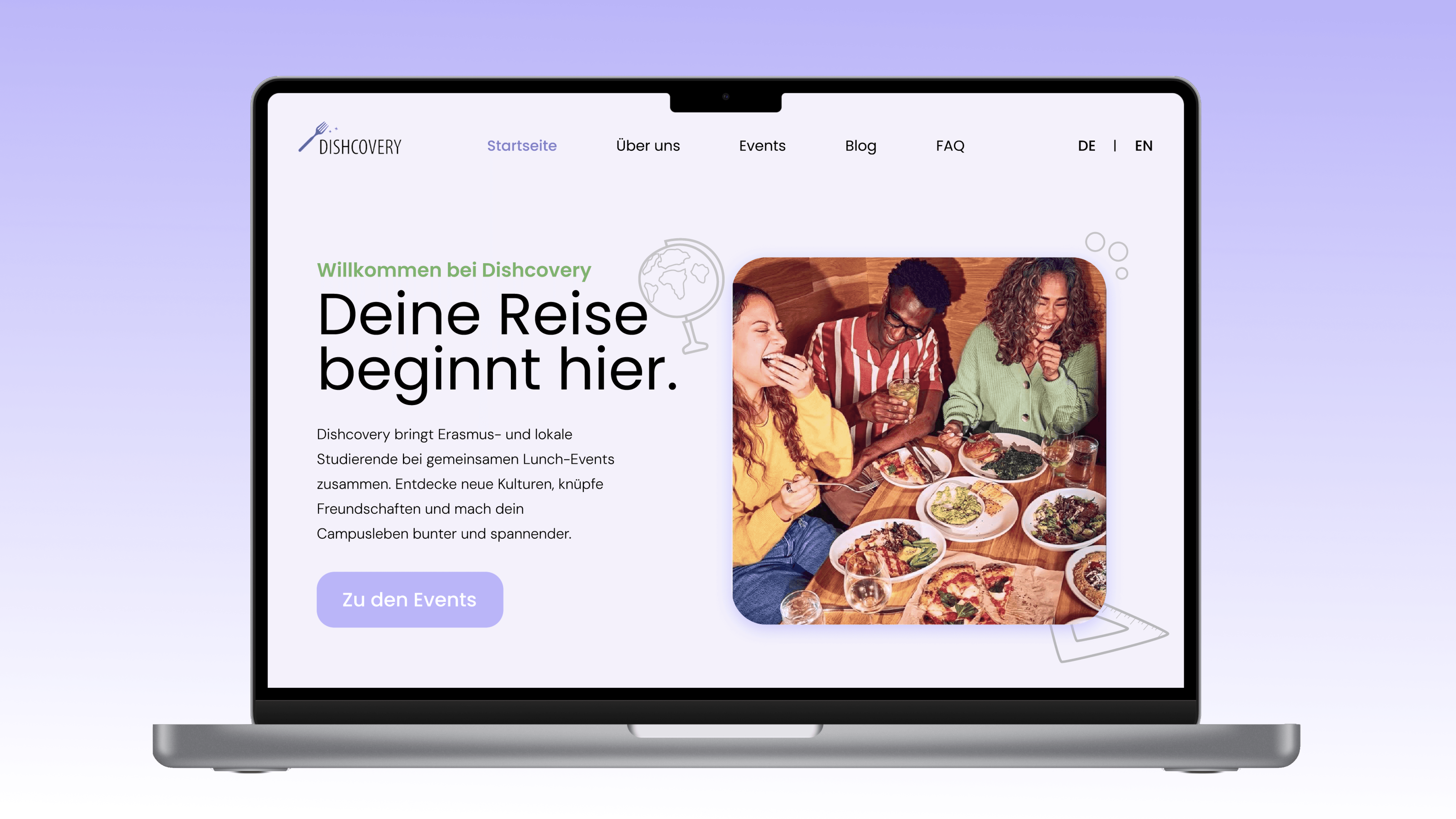
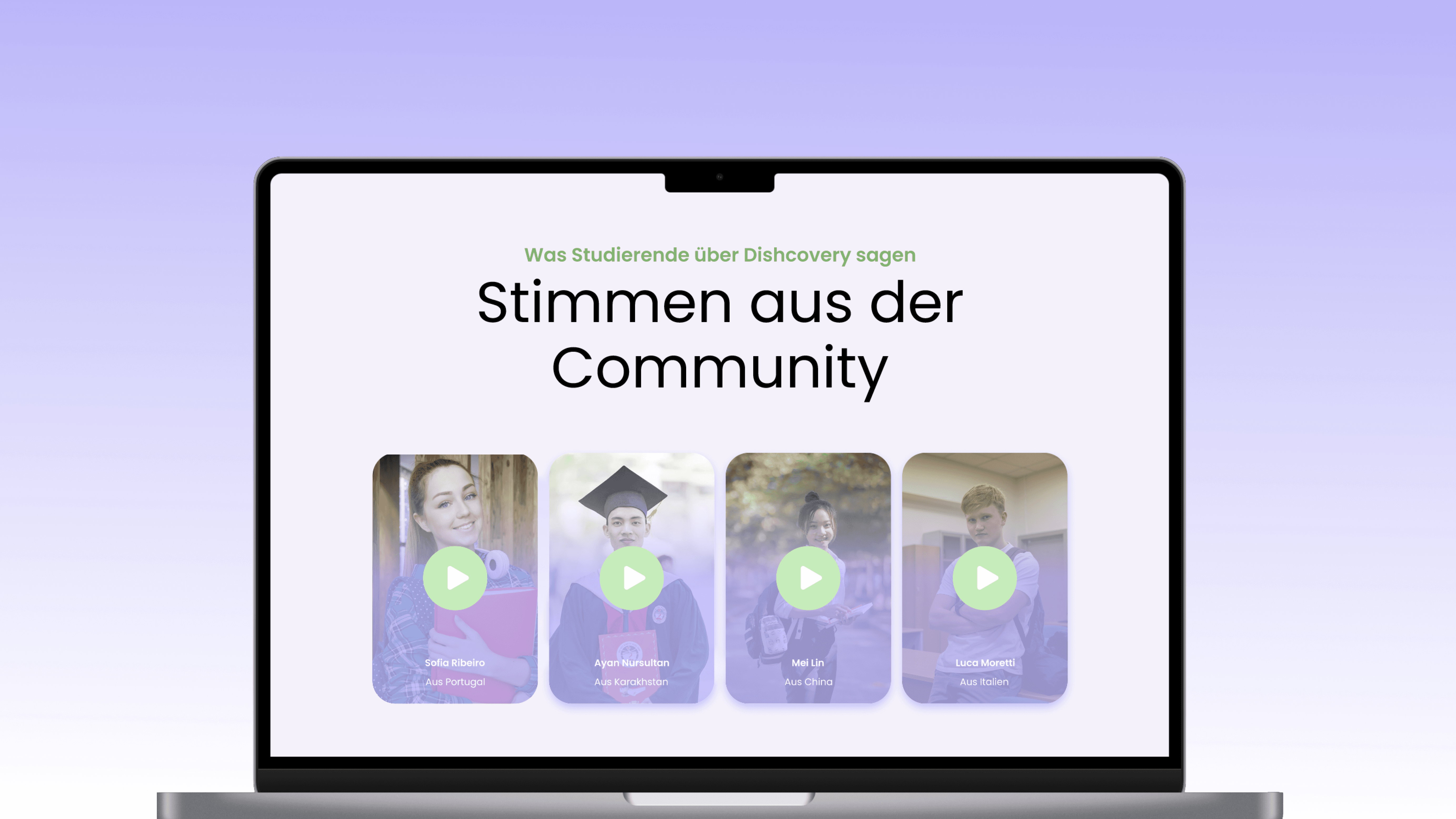
👇 Explore the Dishcovery Website in action in the prototype video below
⭐️ View interactive Figma Prototype → Link